Toolbox talks aren’t just for construction crews or warehouse teams. The idea that workplace safety only applies to physical labor is outdated—and dangerous. Office environments host silent hazards: ergonomic strain, mental fatigue, fire risks, slips, data theft, and psychosocial stress. Yet most office employees have never attended a single safety briefing that addresses them.
That’s where toolbox talks for office employees come in. These short, focused safety discussions—typically 5 to 15 minutes—can transform passive awareness into proactive prevention. When done right, they’re not corporate checkbox exercises. They’re conversations that save wrists, backs, time, and trust.
Why Office Workers Need Toolbox Talks
Office employees operate under the illusion of safety. No cranes, no forklifts, no heavy machinery—so no danger, right? Wrong.
The U.S. Bureau of Labor Statistics reports that office workers experience non-fatal injuries at a rate of over 2.5 per 100 full-time workers annually. Most stem from overexertion (like lifting boxes or awkward mouse use), slips and falls, and repetitive strain. Mental health issues and burnout further contribute to lost productivity and increased absenteeism.
Yet safety programming often skips the cubicle. Why? Because it's assumed that sitting at a desk is inherently low-risk. That assumption is a liability.
Toolbox talks bridge that gap. They reframe safety as a shared responsibility, not a hard-hat-only issue.
Real-World Risks You’re Not Discussing
- A finance analyst develops carpal tunnel from poor keyboard positioning.
- An employee trips over a charging cable in a poorly arranged workspace.
- A manager sends confidential data over unsecured Wi-Fi due to lack of awareness.
- A team stays late during a storm, unaware of severe weather protocols.
These aren’t fringe cases. They’re common—and preventable.
What Is a Toolbox Talk—Exactly?
A toolbox talk is a brief, informal safety meeting designed to: - Highlight a specific hazard - Share preventative strategies - Encourage dialogue - Reinforce safety culture
Traditionally used in high-risk industries, they’re now being adapted for knowledge workers. The format stays the same: short, visual, participatory. But the content shifts to match office realities.
Unlike lengthy safety trainings or annual compliance modules, toolbox talks are: - Timely – held weekly or biweekly, often before team stand-ups - Focused – one topic per session - Practical – actionable, not theoretical - Interactive – employees speak, not just listen
Key Topics for Office-Based Toolbox Talks
Generic safety talks fail because they’re irrelevant. The magic is in specificity. Here are seven high-impact topics every office team should cover:
1. Ergonomics at the Desk Poor posture leads to chronic pain and lost productivity. A toolbox talk on ergonomics should include: - Correct chair height (feet flat, knees at 90°) - Monitor placement (top at or below eye level) - Keyboard and mouse positioning (elbows close, wrists neutral) - The 20-20-20 rule (every 20 minutes, look 20 feet away for 20 seconds)

Example discussion prompt: “Show us your workspace. What’s one thing you could change today?”
2. Slip, Trip, and Fall Prevention
Most office falls happen near kitchens, stairwells, or poorly lit corridors. Topics include: - Cable management under desks - Cleaning spills immediately - Avoiding loose rugs or frayed mats - Carrying loads that block vision
Mistake to avoid: Assuming “it’s just a small puddle.” A single fall can lead to weeks off work.
3. Fire and Evacuation Awareness
Many office workers don’t know evacuation routes or assembly points. A safety talk should: - Confirm location of fire exits and extinguishers - Review emergency procedures - Address panic triggers and clear communication
Use case: Run a drill after the talk. See how many people actually go to the right exit.
4. Mental Health and Workload Management Stress is a workplace hazard. Normalizing mental health in toolbox talks reduces stigma. Cover: - Signs of burnout (irritability, fatigue, disengagement) - How to ask for help - Encouraging breaks and time off
Tip: Bring in HR or an EAP (Employee Assistance Program) rep occasionally to co-lead.
5. Cybersecurity Basics Data breaches often start
with human error. Discuss:
- Recognizing phishing emails
- Using strong passwords and MFA
- Avoiding public Wi-Fi for work
- Locking screens when stepping away
Real scenario: “Would you open an email titled ‘Urgent: Payroll Update – Click Here’?” Test with your team.
6. Electrical and Equipment Safety Office equipment isn’t risk-free. Topics:
- Overloaded power strips
- Frayed laptop chargers
- Unplugging devices after hours
- Proper use of space heaters
Red flag: Daisy-chaining power strips. It’s common—and a fire hazard.
7. Emergency Weather and Business Continuity
When storms hit or transit fails, clarity saves chaos. Talk about: - Remote work triggers - Communication channels during outages - Who makes decisions when leadership is unreachable
Pro tip: Review during seasonal changes—before winter storms or hurricane season.
How to Run an Effective Toolbox Talk
A poorly run talk is worse than no talk at all. It breeds cynicism. Follow this workflow:
1. Pick a Focused Topic One hazard, one solution. Avoid “All About Office Safety” marathons.
2. Choose a Facilitator Rotate among team members. It builds ownership and engagement.
3. Keep It Short 5–15 minutes max. Use visuals: a photo of poor cable setup, a diagram of correct posture.
4. Encourage Participation Ask questions:
- “Has anyone had a close call with tripping?”
- “What’s one thing you do to protect your eyes?”
5. Document Attendance and Topics Not for bureaucracy—but accountability. Track what’s covered and who attended. Use a simple log.
6. Act on Feedback If three people mention glare on their screens, address it. Follow-through proves the talks matter.
Common Mistakes That Kill Engagement
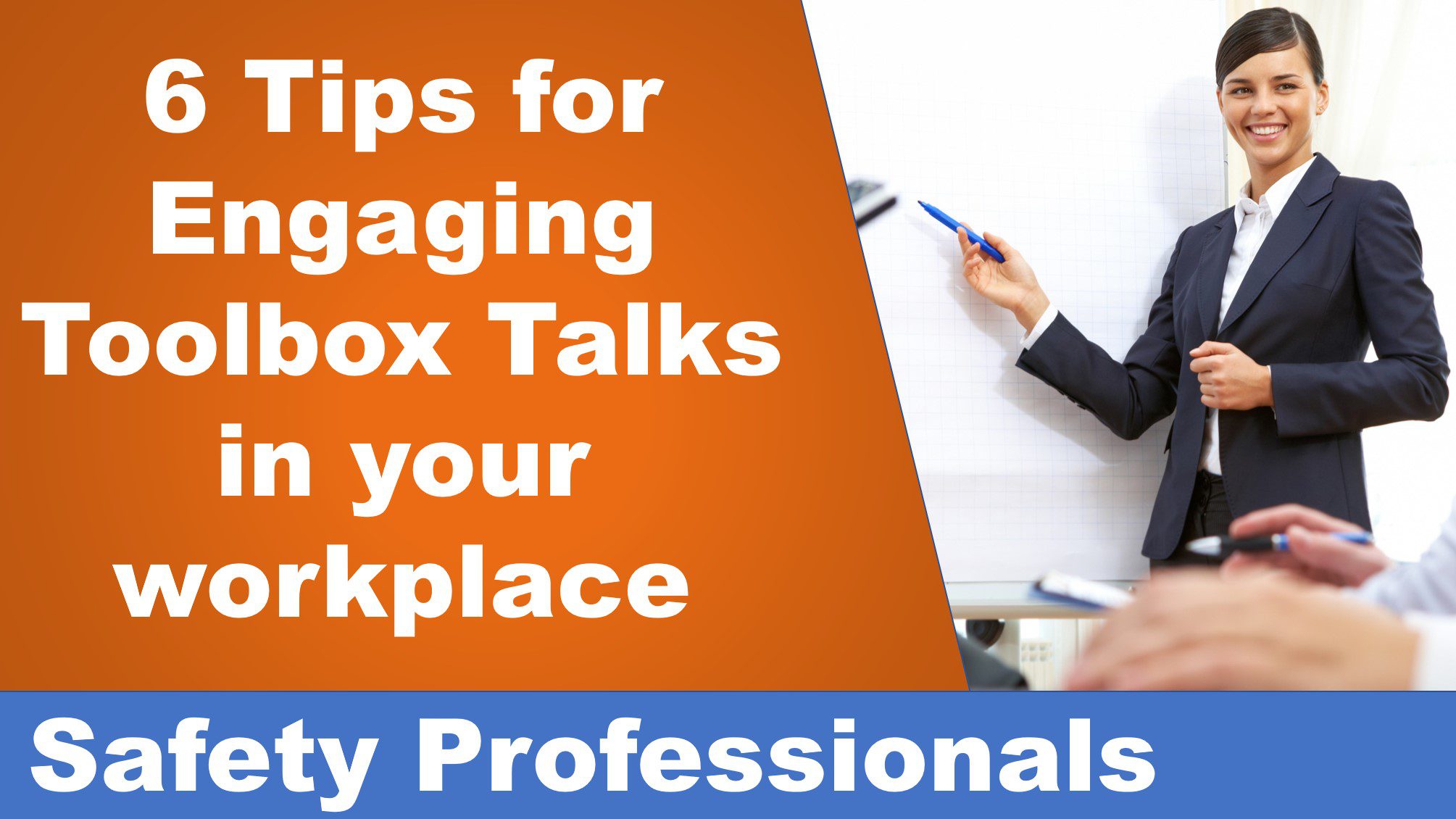
Toolbox talks fail when they feel like compliance theater. Watch for these pitfalls:
- Too generic: “Be safe today” isn’t a talk. It’s noise.
- Top-down delivery: Managers lecturing kills dialogue.
- Inconsistent scheduling: Monthly or random talks lose momentum.
- No follow-up: If risks are raised but ignored, trust erodes.
- One-size-fits-all: A marketing team’s risks differ from IT’s. Customize accordingly.
The best talks are peer-led, practical, and tied to real incidents—near misses or actual events.
Making Safety Part of Office Culture
Sustainability comes from integration, not isolation.
- Link talks to onboarding: New hires attend their first toolbox talk in week one.
- Tie to performance reviews: Not to punish, but to recognize safety leadership.
- Celebrate improvements: “After our ergo talk, 80% adjusted their monitor height.”
Culture isn’t built in a day. It’s built in minutes—repeated weekly.
Tools to Support Office Toolbox Talks
You don’t need expensive software. But templates and structure help. Here are five practical resources:
| Tool | Key Feature | Best For |
|---|---|---|
| SafetyCulture (iAuditor) | Pre-built office safety checklists and talk templates | Teams wanting digital tracking and reporting |
| ClickUp or Asana | Task lists and recurring reminders | Scheduling and assigning facilitators |
| Google Slides or Canva | Visual templates for each topic | Creating engaging, branded talk decks |
| Microsoft Teams or Slack | Post-talk polls and reminders | Quick feedback and reach |
| Internal Wiki (Notion, Confluence) | Centralized archive of past talks | Onboarding and reference |
Use what you already have. The goal isn’t tech—it’s consistency.
The Bottom Line: Safety Is Everyone’s Job
Toolbox talks for office employees aren’t about fear. They’re about respect—respect for people’s well-being, time, and contribution.
When a team pauses to discuss how to lift a box properly or where the fire exit is, it sends a message: You matter. Your safety matters—even here.
Start small. Pick one topic. Gather your team. Talk for ten minutes. Then do it again next week.
Because the best safety culture isn’t built in policy manuals. It’s built in moments—real, brief, human conversations that say: “Let’s make sure we all go home okay.”
FAQ What should a toolbox talk for office employees include? A clear topic, real examples, visual aids, time for questions, and a call to action—like adjusting your chair or reporting a tripping hazard.
How often should office toolbox talks happen? Weekly or biweekly works best. Monthly talks often lose momentum and relevance.
Who should lead toolbox talks in an office? Rotate among team members. It promotes engagement and shared responsibility.
Are toolbox talks legally required for office workers? Not typically, but they support compliance with OSHA’s general duty clause and reduce liability from preventable incidents.
Can toolbox talks improve mental health awareness? Yes. Regular, open discussions reduce stigma and encourage employees to seek help early.
How do I make toolbox talks engaging? Use real stories, ask questions, keep it short, and act on feedback. Avoid lectures.
What if employees see these as a waste of time? Start with high-impact topics they care about—like reducing eye strain or managing workload. Show immediate value.
FAQ
What should you look for in Toolbox Talks for Office Employees: Hidden Risks, Real Solutions? Focus on relevance, practical value, and how well the solution matches real user intent.
Is Toolbox Talks for Office Employees: Hidden Risks, Real Solutions suitable for beginners? That depends on the workflow, but a clear step-by-step approach usually makes it easier to start.
How do you compare options around Toolbox Talks for Office Employees: Hidden Risks, Real Solutions? Compare features, trust signals, limitations, pricing, and ease of implementation.
What mistakes should you avoid? Avoid generic choices, weak validation, and decisions based only on marketing claims.
What is the next best step? Shortlist the most relevant options, validate them quickly, and refine from real-world results.